
The Making Of A Sculpture That Speaks To Impermanence
Awarded the Serpentine Pavilion commission in London, architect Marina Tabassum conceived a luminous structure that embodied her firm’s focus on climate and equality, temporary and long-lasting. “Our concept reflected on the transient nature of the commission, which appeared to us as a capsule of memory and time, of permanence and impermanence,” she says.
Behind-the-Design of Marina Tabassum’s Serpentine Pavilion Commission
- 36 designers, engineers, ad technical advisors led by Marina Tabassum
- 102 feet long
- 600 polycarbonate panels
- 5 colors of film
- one gingko tree
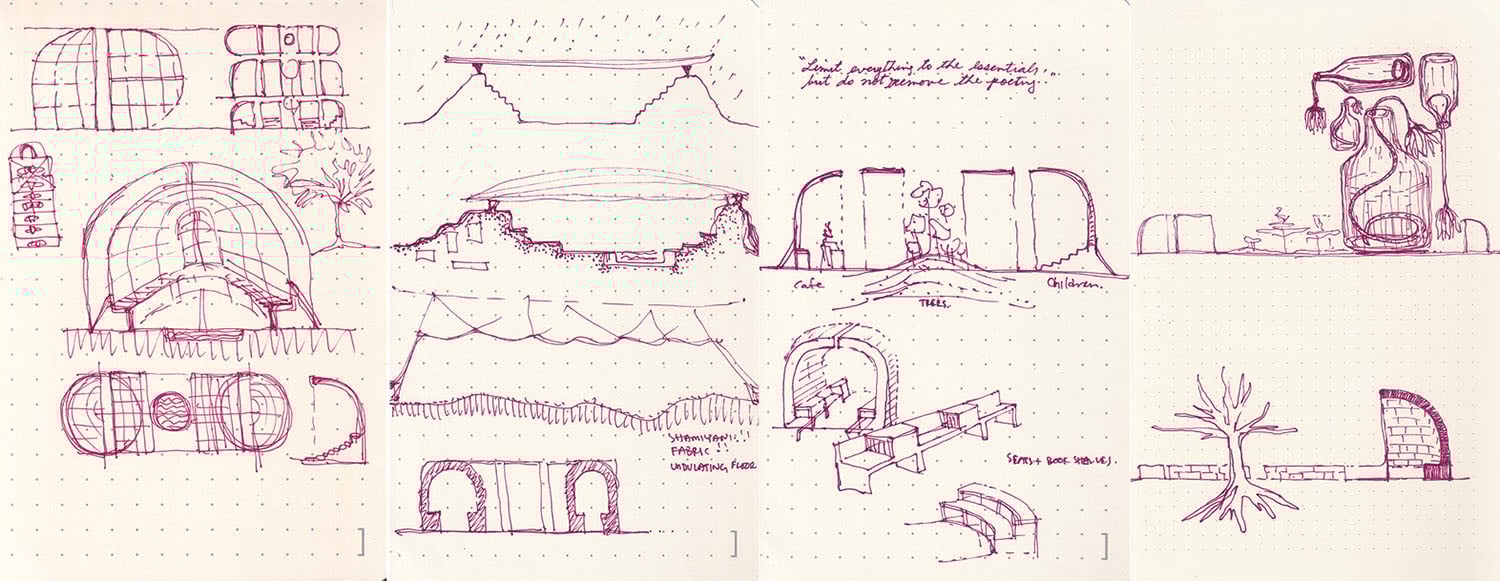
In the early stages of designing A Capsule in Time, the 2025 Serpentine Pavilion temporary installation last summer on the grounds of London’s Serpentine Galleries, Marina Tabassum Architects founder Marina Tabassum hand-sketched ideas for an elongated, segmented structure built around a semi-mature tree and inspired by cloth-and-bamboo Shamiyana, open-air tents erected for weddings in Bangladesh, Tabassum’s native country, that are both reusable and rooted to place.
Her concept came to life with technical support from AECOM and manufacturing expertise by Stage One Creative Services, which fabricated custom steel frames for the pavilion’s vaulted roof in its Tockwith facility.
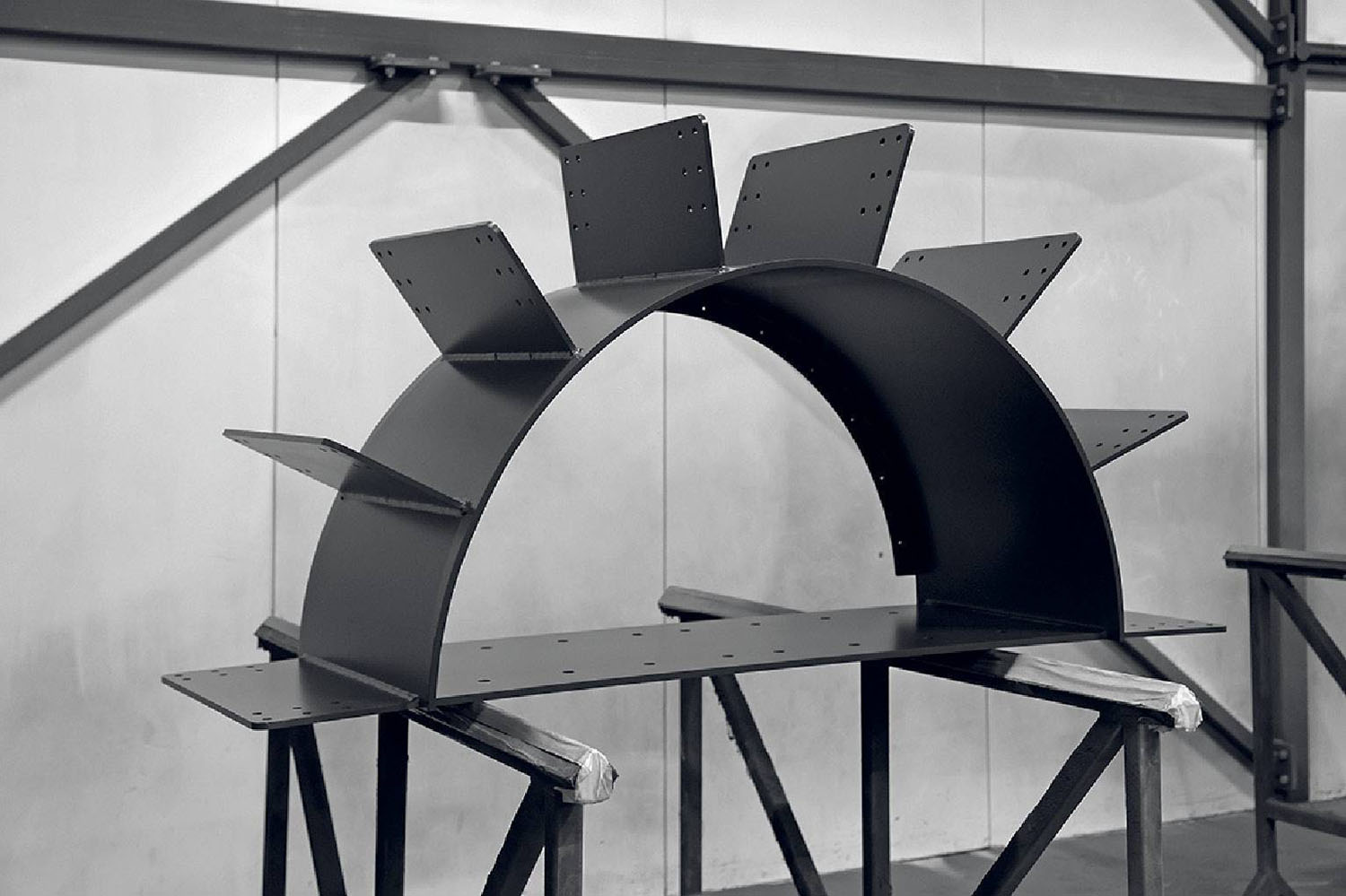
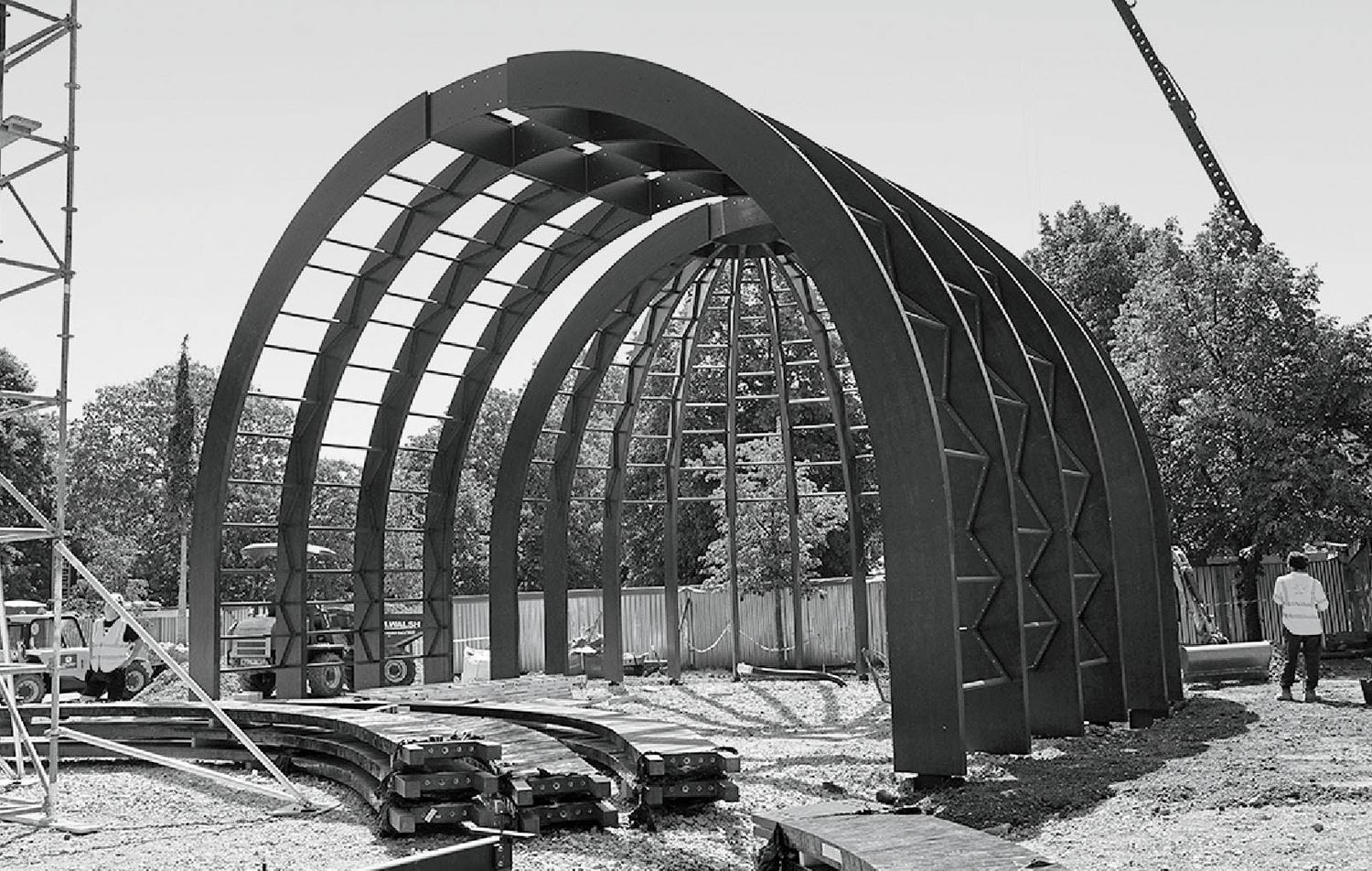
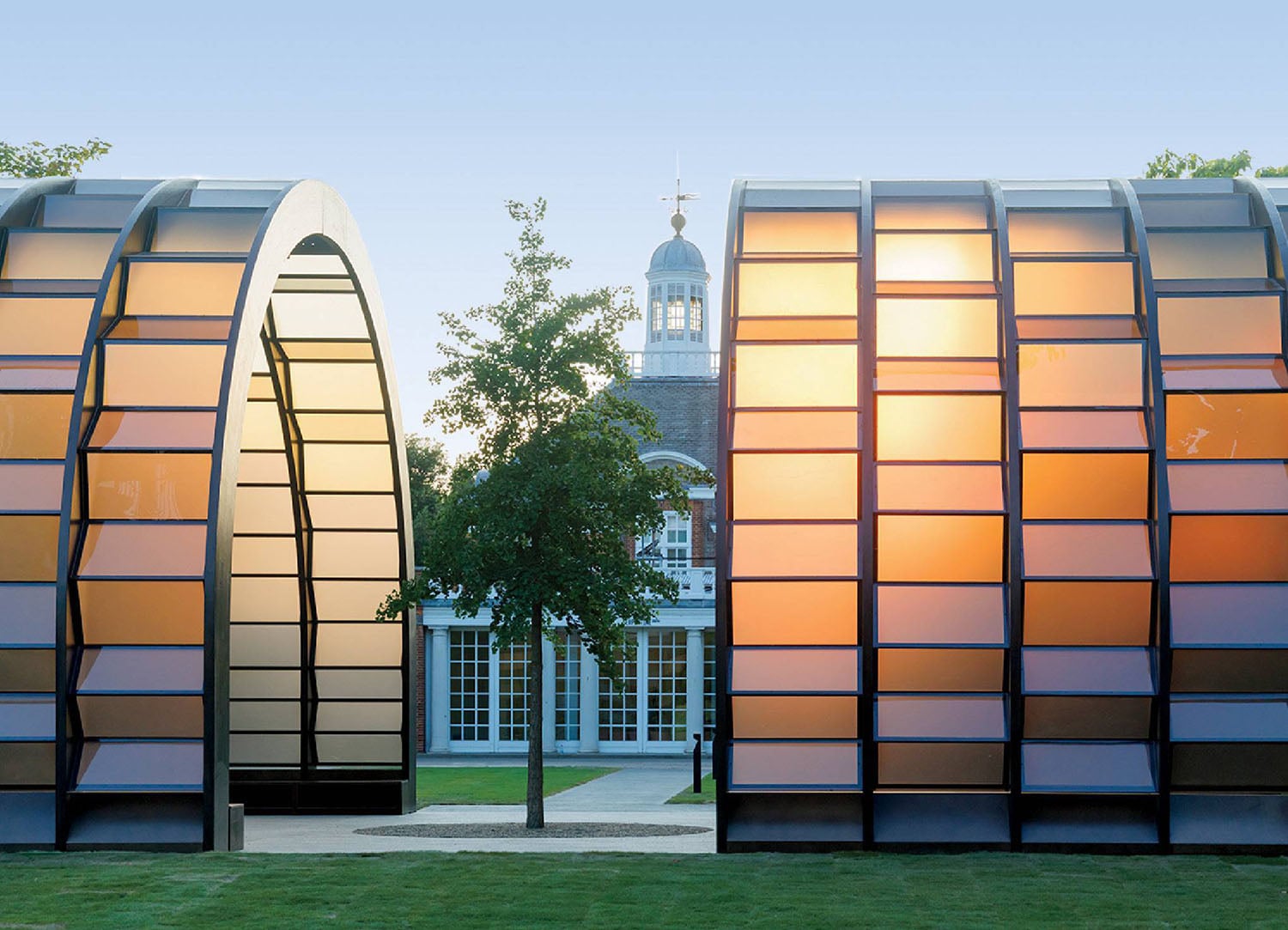
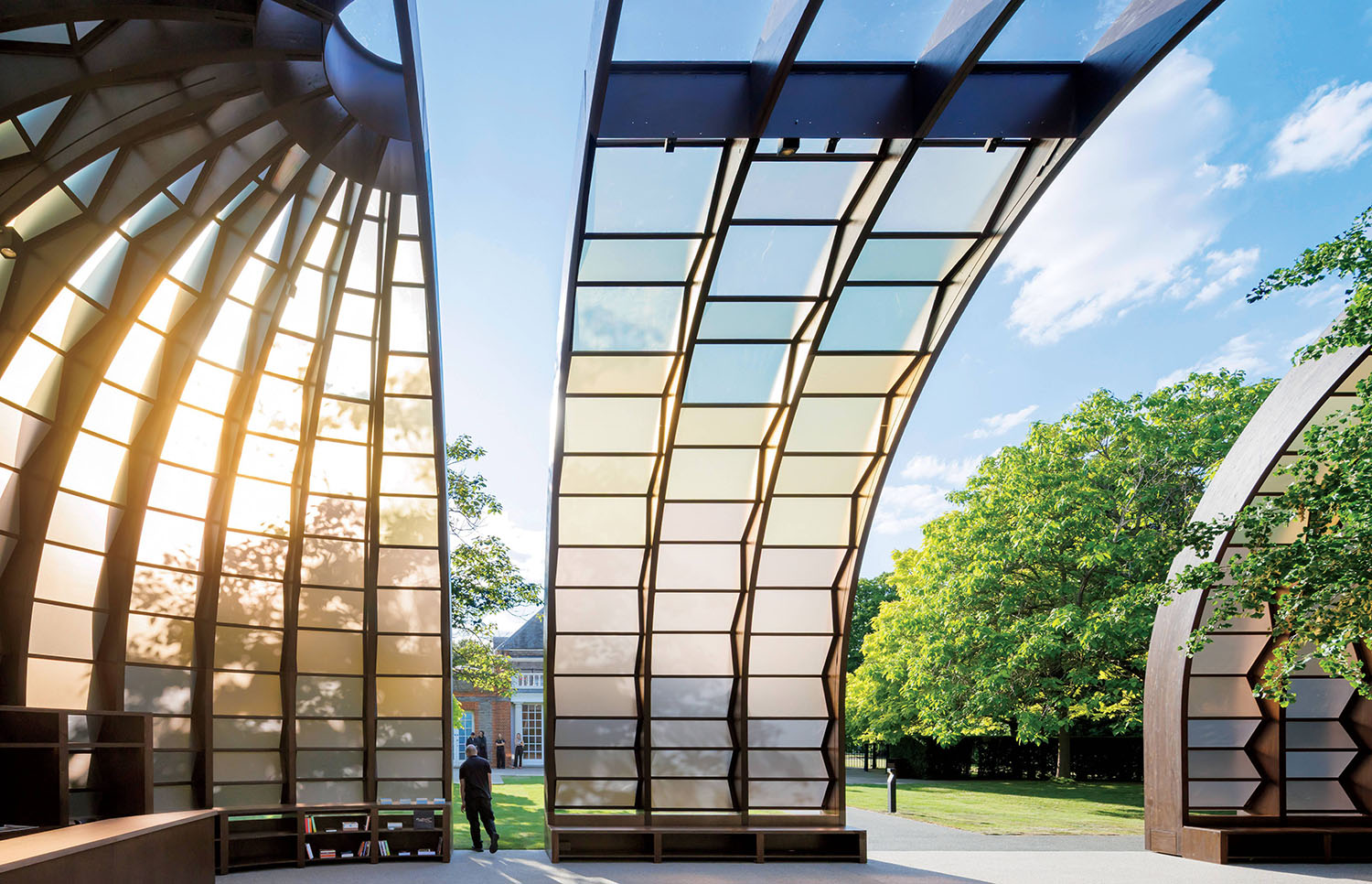
The steel framed glulam ribs that were later fitted with hundreds of polycarbonate panels covered with translucent film in golden coffee and tea shades.
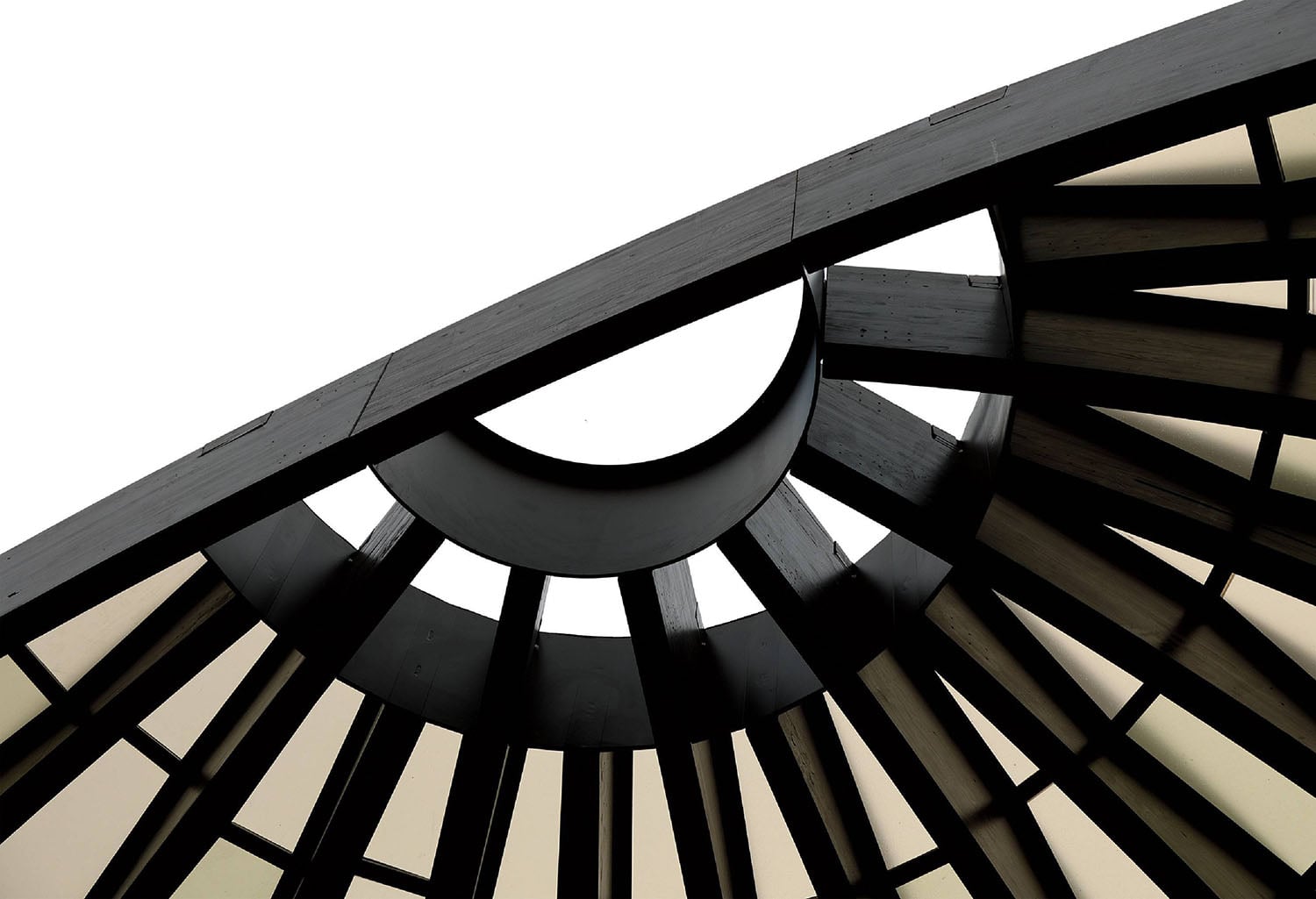
After a temporary foundation was built on-site, the team installed the glulam ribs that would form the pavilion’s four sections.
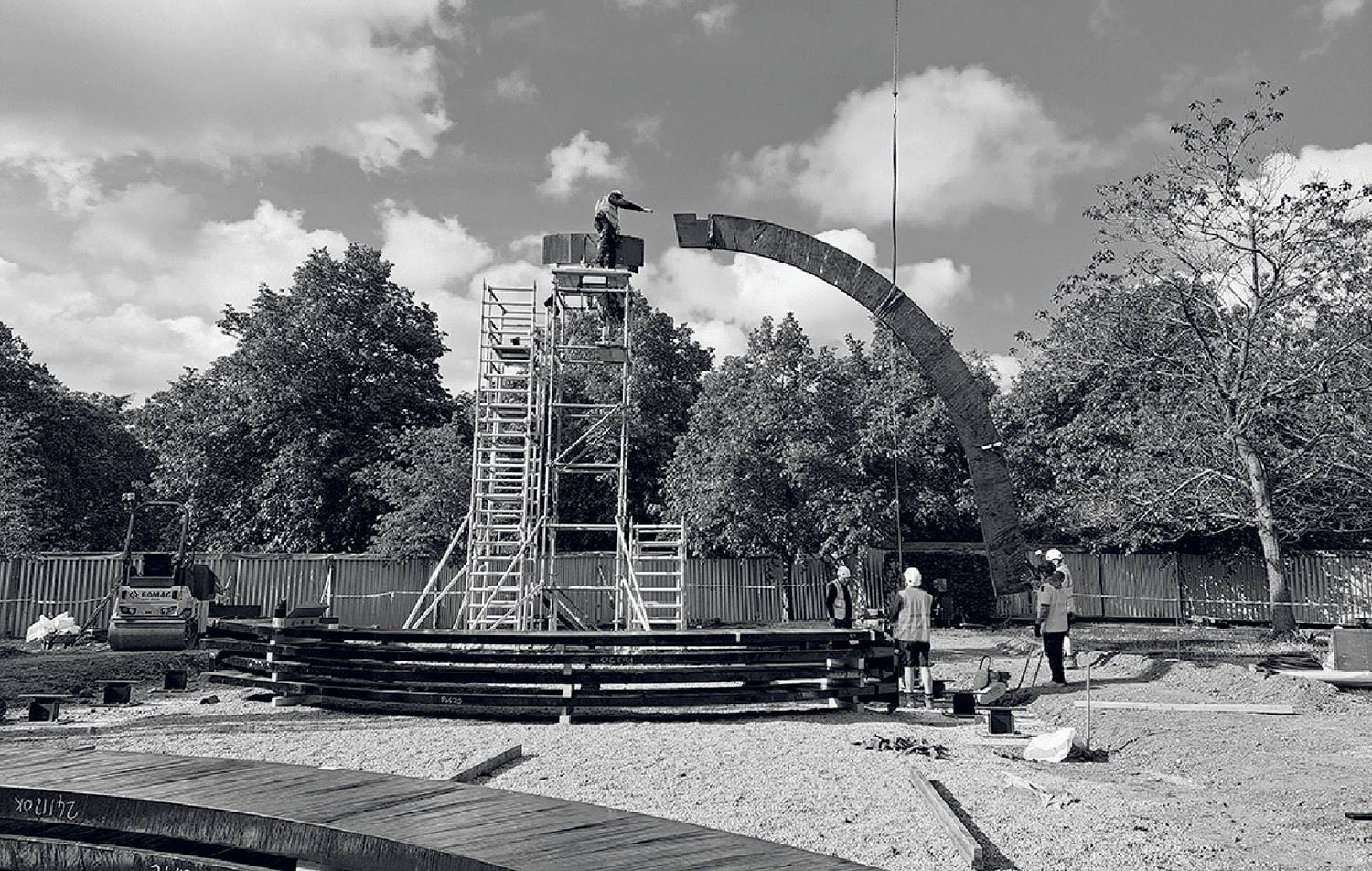
After a temporary foundation was built on-site, the team installed the glulam ribs that would form the pavilion’s four sections.
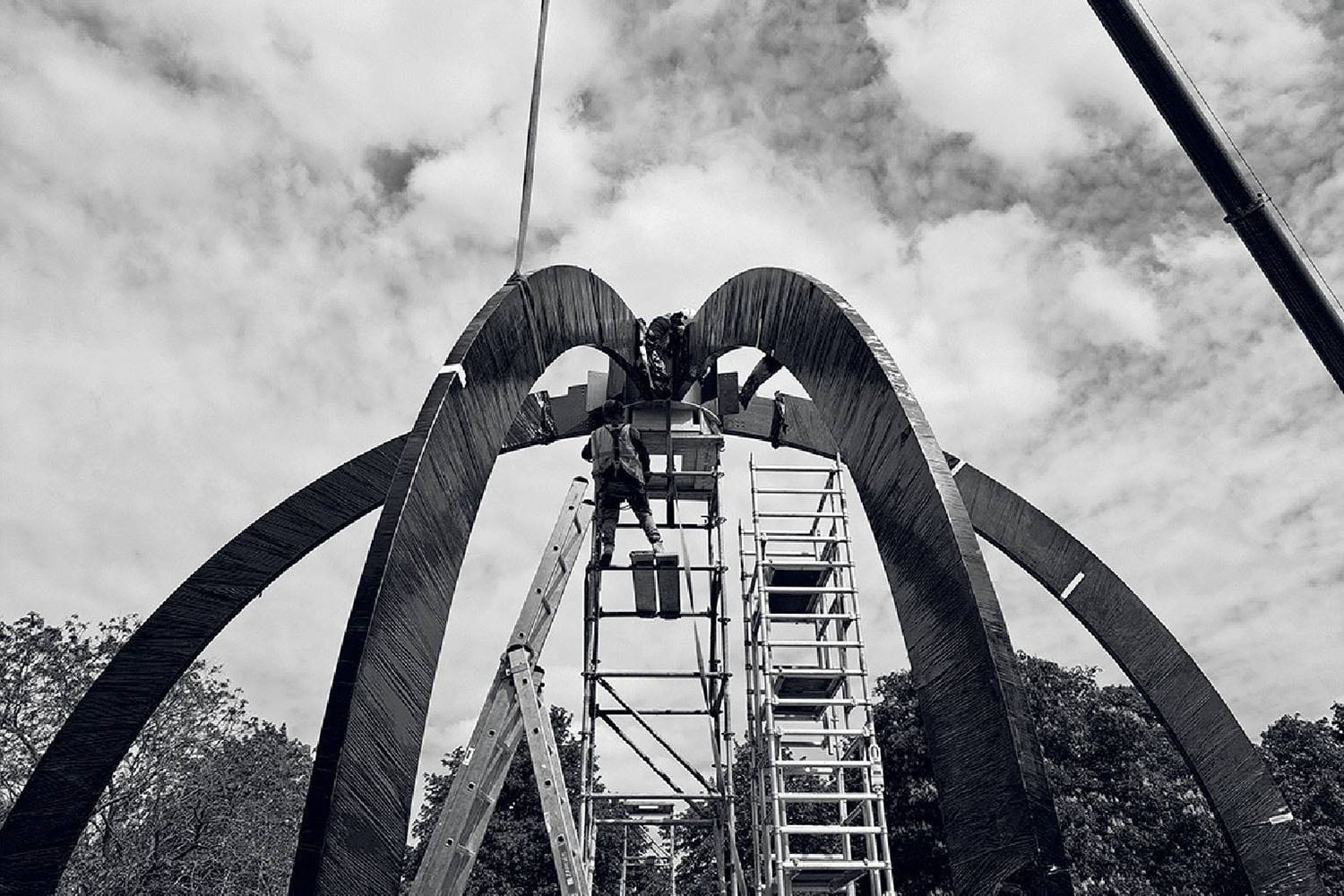
One section was kinetic, positioned on a concealed track so it could slide and be open to the elements, like a Shamiyana.
Bisecting MTA’s A Capsule in Time was a courtyard with the 27-foot gingko, which was chosen for its climate-change tolerance and, during the June 6 to October 26 run, how its leaves shift from green to a panel-complementary yellow and has been replanted in Kensington Gardens.
The 2025 installation was especially meaningful as it kickstarted the 25th anniversary of the commission, which initially launched with a structure by the late Dame Zaha Hadid and continues her ethos of pushing the boundaries of architecture—something Tabassum, whose work strives to improve living conditions for the marginalized, landing her on Time magazine’s 100 Most Influential People list last year, exemplifies.
read more
DesignWire
Rethinking Basketry: An Exhibit That Reframes The Woven Form
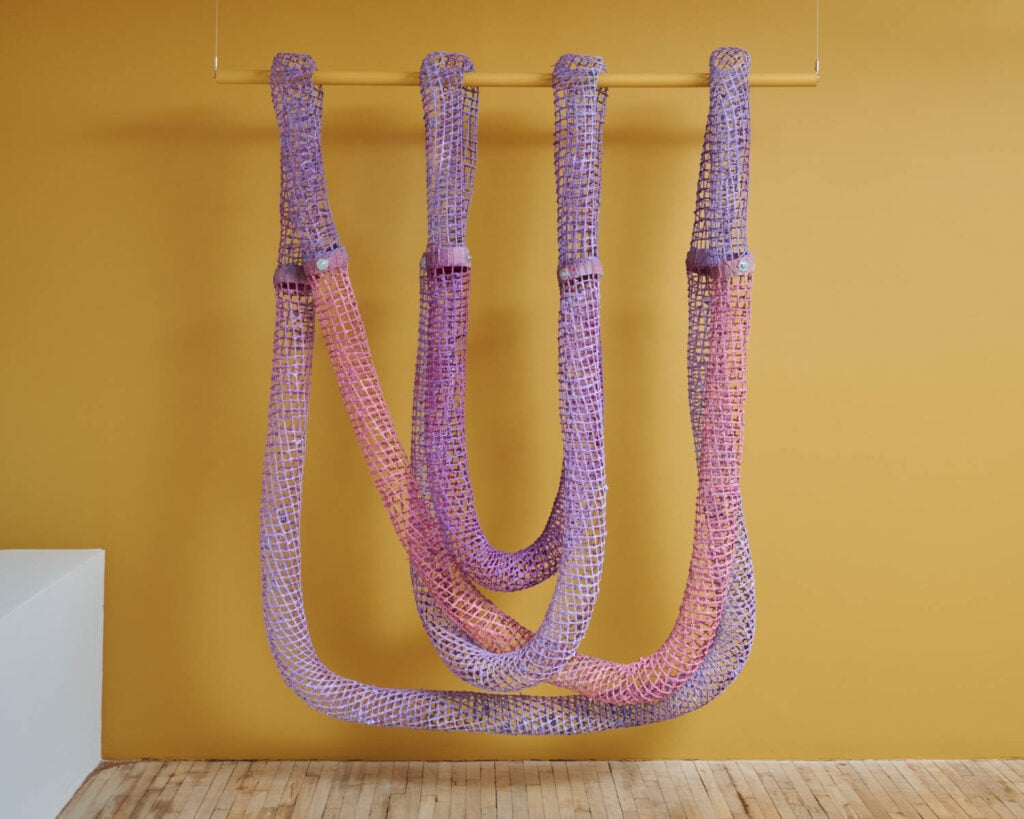
Artists Sarita Westrup and Lewis Prosser offer stories of identity and basketry tradition in “Shared Ground,” an exhibit at Superhouse gallery in lower Manhattan.
DesignWire
10 Questions With… Nicole Cherubini
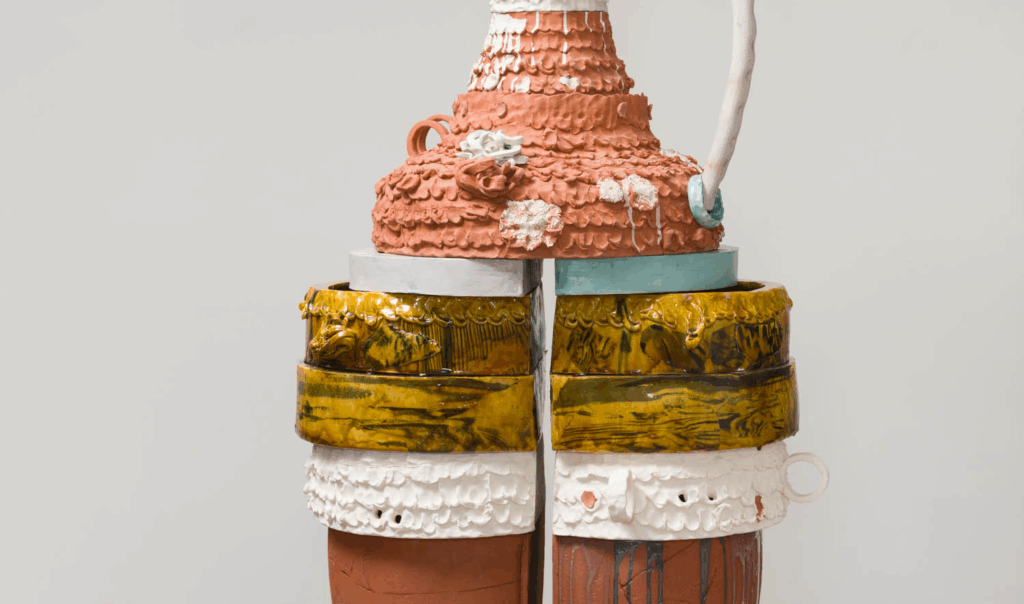
Nicole Cherubini’s exhibition at Friedman Benda transforms feminist literature and Roman influence into ceramic pieces exploring identity and storytelling.